


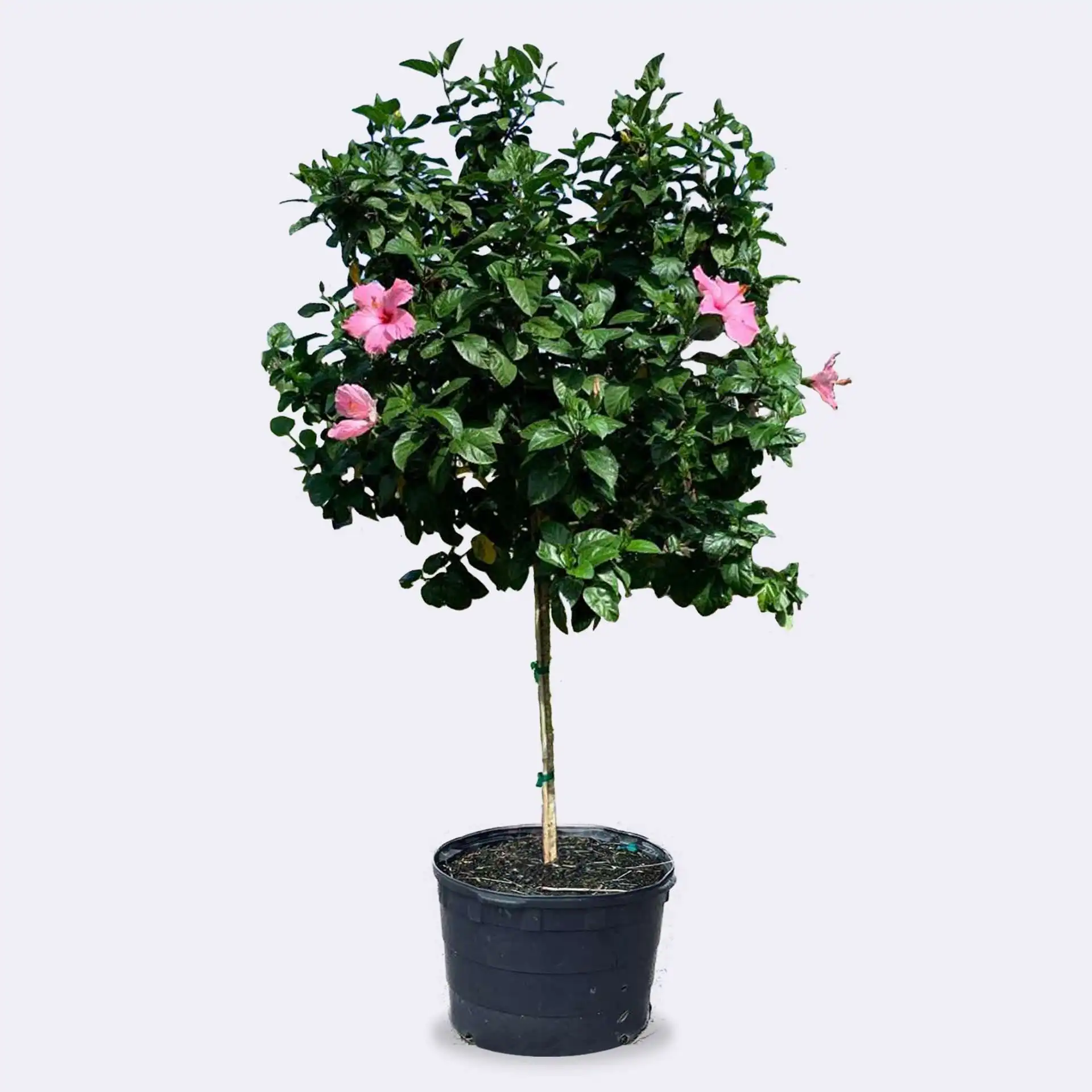

Hibiscus Tree (Hibiscus rosa-sinensis)
The Hibiscus Tree, scientifically known as Hibiscus rosa-sinensis, is a stunning and versatile tropical plant that can be trained as a small tree, shrub, or hedge. Known for its large, vibrant flowers, the Hibiscus Tree adds a touch of tropical elegance to gardens, patios, and indoor spaces in warm climates.
Hibiscus Tree Breakdown
Appearance:
The Hibiscus Tree is renowned for its large, showy flowers that come in a wide range of colors, including red, pink, orange, yellow, white, and even bi-color varieties.
The flowers are trumpet-shaped with prominent, protruding stamens, and can reach up to 6 inches in diameter. The plant's foliage is dark green and glossy, with ovate leaves that provide a lush backdrop to the colorful blooms. When trained as a tree, the Hibiscus develops a single or multi-trunked form with a rounded canopy covered in flowers throughout the growing season.
Growth Rate:
Moderate to fast.
The Hibiscus Tree grows steadily, especially in warm, sunny environments, and can quickly fill in spaces with vibrant color and lush foliage.
Size:
Typically grows to heights of 6-10 feet with a spread of 4-6 feet when trained as a tree.
However, it can be pruned to maintain a more compact size or shaped into a larger shrub or hedge, depending on the landscape design.
Sunlight Requirements:
Prefers full sun to partial shade.
Hibiscus thrives in bright, direct sunlight, which promotes abundant flowering. It requires at least 6 hours of sunlight daily to produce the best blooms.
Water Needs:
Requires regular watering, especially during the growing season.
The soil should be kept consistently moist but not waterlogged. Hibiscus prefers well-draining soil and benefits from deep watering that encourages a strong root system.
Soil Preferences:
Thrives in well-draining, fertile soil with a slightly acidic to neutral pH.
A mix of garden soil and organic matter such as compost or peat moss works well. Hibiscus can tolerate a range of soil types, but rich, well-drained soil promotes the healthiest growth and most prolific blooming.
Maintenance:
Moderate.
Regular pruning is recommended to maintain the tree's shape and encourage bushier growth, which leads to more flowers. Deadheading spent flowers can also promote continuous blooming. Fertilize monthly during the growing season with a balanced, water-soluble fertilizer to support healthy growth and vibrant flowers. Hibiscus is also prone to pests such as aphids, whiteflies, and spider mites, so regular inspection and treatment are important.
Landscape Use:
Ideal for use as a specimen tree, in mixed borders, or as a flowering hedge.
Its large, colorful flowers make it a focal point in tropical and subtropical gardens. The Hibiscus Tree can also be grown in large containers, making it versatile for patios, balconies, and other outdoor living spaces. It can also be used as a colorful accent in poolside gardens or courtyards.
Climate Tolerance:
Hardy in USDA zones 9-11.
The Hibiscus Tree prefers warm, humid climates and can tolerate heat. It is frost-sensitive and should be protected or brought indoors during cold weather in cooler regions. In colder climates, it can be grown as a houseplant or in containers that can be moved indoors during the winter.
The Hibiscus Tree is a beautiful and versatile plant that adds a burst of tropical color and charm to any landscape. Whether grown as a tree, shrub, or container plant, its vibrant flowers and lush foliage make it a favorite among gardeners and plant enthusiasts. With proper care, the Hibiscus Tree can provide stunning blooms and a touch of the tropics to gardens, patios, and indoor spaces year-round.
Frequently Asked Questions
How to Plant & Care for Hibiscus Tree in Florida
Select a Stable Location
Choose a spot with full sun to partial sun and room for mature canopy growth. Avoid planting too close to structures.
Dig a Wide Hole
Dig 2–3x wider than the root ball but only as deep as the container. Trees should never be planted too deep.
Set Tree + Backfill
Place the tree level to slightly above grade. Backfill with native soil and firm gently to remove air pockets.
Deep Watering Schedule
Water deeply right after planting, then daily for the first 1–2 weeks. Gradually taper as roots establish.
Staking + Early Care
Stake only if needed for stability. Remove stakes once rooted. Minor leaf drop during establishment is normal.
Professional Installation Available: Not comfortable planting yourself? We offer expert installation services throughout Florida. Our team has 15+ years of experience ensuring your plants thrive. Call 561-898-2028 to add installation to your order.
What Florida Customers Say
Excellent communication and awesome product! At an incredible price too! We're really happy with our new palm trees 🌴 Thank you so much!
No need to look any further than Dino's Palms :) Incredible website - very easy to use. After a few minutes with fantastic pricing, I purchased what was needed and sent the order. Received an immediate reply and a subsequent date for installation. The tree was as described - the installer was professional and thorough even cleaning where some dirt had fallen in the street. Will deal again Highly recommend / easy 5 Stars - thank you!!!
Dino's Palms just completed a full landscape install at our property in Tequesta. They planted 10 Christmas palms, 9 Coconuts, Silver buttonwood trees, hundreds of clusia, and more small plants. I cannot speak highly enough about the quality and service.


