


Hedge Plant Spacing Calculator: How Many Plants per Linear Foot?
Already know the length of your hedge line? Enter your linear feet, pick the plant and pot size, and get the exact number of Clusia, Podocarpus, Cocoplum, Green Island Ficus, Viburnum, Sea Grape or Areca Palm plants you need, with the spacing we use on our own installs. Not sure how many feet you have? Draw your hedge on a satellite map and we'll measure it for you.
Calculate Your Plants
Enter your measurements and select your preferred plant to get an instant calculation.
Complete Guide to Hedge Plant Spacing in Florida
Expert advice on calculating privacy hedge quantities, spacing requirements, and installation for Florida landscapes. Learn how to properly space Clusia hedges, Podocarpus privacy screens, Cocoplum borders, and Green Island Ficus hedgerows.
Why Proper Plant Spacing Matters
Correct spacing is critical for hedge success. Plant too close, and you'll waste money while creating competition for nutrients and water. Plant too far apart, and you'll wait years for privacy coverage with visible gaps that never fully fill in.
The spacing recommendations in our calculator are based on the spacing we use on our own South Florida installs. They account for each plant's mature width, growth rate, and optimal health requirements. Follow these guidelines to achieve full coverage within 1-2 years while maintaining healthy, vigorous plants.
Understanding Pot Sizes & Spacing
Larger pot sizes need more space because they're already more mature with wider canopies. Here's how pot size affects your hedge planning:
- 3-Gallon: Budget-friendly, closer spacing (1-1.5 ft), fills in 18-24 months
- 7-Gallon: Balanced option, moderate spacing (1.5-2 ft), fills in 12-18 months
- 15-Gallon: Instant impact, wider spacing (2-3 ft), fills in 6-12 months
- 25-Gallon: Immediate privacy, widest spacing (2.5-4 ft), instant coverage
Pro tip: 15-gallon plants offer the best value for most homeowners—significant instant impact without the premium price of 25-gallon specimens.
Plant-Specific Spacing Requirements
Each hedge species grows differently in Florida's climate. Our calculator uses these proven spacing guidelines:
🌿 Clusia
Spacing: 1.5–4 ft
Fast-growing with thick, glossy foliage. Wider spacing works because it fills gaps quickly. The go-to South Florida privacy hedge.
🌿 Podocarpus
Spacing: 1–2.5 ft
Slower, denser growth needs closer spacing. Creates a formal, refined hedge with consistent coverage.
🌿 Red Tip Cocoplum
Spacing: 1.5–3 ft
Compact Florida native with red new growth. Tight spacing makes a dense, low-maintenance coastal hedge.
🌿 Green Island Ficus
Spacing: 1–4 ft
Dense, compact ficus. Close spacing creates a solid green wall, ideal for low hedges and smaller properties.
🌿 Sea Grape
Spacing: 2–5 ft
Big round leaves and a wide spread. Extremely salt and wind tolerant, so it gets more room than Clusia.
🌿 Viburnum Suspensum
Spacing: 1.5–4 ft
Classic dense, dark-green hedge that takes shearing well. Handles sun or part shade.
🌿 Sweet Viburnum
Spacing: 3–4 ft
Fast, tall privacy hedge with fragrant spring flowers. Great for 8–12 ft screens.
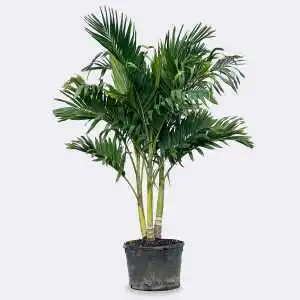
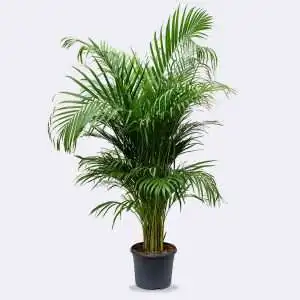
🌿 Areca Palm
Spacing: 3–5 ft
Clumping palm that makes a tall tropical screen fast. Each clump spreads wide, so give it room.
🌿 Green Buttonwood Bush
Spacing: 1.5–3 ft
Tough Florida native for coastal and windy spots. Fills into a dense, informal hedge.
🌿 Silver Buttonwood Bush
Spacing: 1.5–2 ft
Silvery-gray foliage, salt tolerant, loves full sun. Same spacing as green buttonwood.
🌿 Italian Cypress
Spacing: 3–4 ft
Narrow, columnar evergreen. Stays tight even when tall, so spacing barely changes with pot size.
🌿 Spartan Juniper
Spacing: 3 ft
Upright, dense conifer for a formal screen. Plant 3 ft apart for a solid wall.
🌿 Ixora Nora Grant
Spacing: 1.5–2.5 ft
Flowering hedge with big pink-red blooms. Compact grower, keep spacing tight.
🌿 Ixora Maui
Spacing: 1.5–2.5 ft
Bright orange-red blooms on a compact shrub. Same spacing as other Ixoras.
🌿 Ixora Taiwanese
Spacing: 1.5–2.5 ft
Dwarf Ixora with small leaves and constant color. Ideal for low flowering borders.
🌿 Dwarf Clusia Nana
Spacing: 1.5–2 ft
Low, mounding Clusia for borders and foundation beds. Tight spacing for a clean edge.
🌿 Podocarpus Pringles Dwarf
Spacing: 1.5 ft
Dwarf, slow-growing Podocarpus for low hedges and borders.
🌿 Variegated Triangle Ficus
Spacing: 2–3 ft
Cream-and-green triangular leaves. Fills in wide, so it gets a little more room than Green Island.
🌿 Lady Palm
Spacing: 3–4 ft
Clumping shade palm for screening under trees or on the north side of the house.
🌿 Muhly Grass
Spacing: 2.5 ft
Native ornamental grass with pink fall plumes. Mass-plant for a soft border.
How to Measure Your Linear Feet
Many homeowners confuse linear feet with square footage. Here's the difference:
❌ Wrong: Square Footage
"My property is 50ft × 100ft = 5,000 sq ft, so I need X plants"
✓ Correct: Linear Feet
"I want a hedge along my back fence which is 100 feet long, so I need plants for 100 linear feet"
To measure: Use a measuring tape or walk the perimeter where you want the hedge. Add up all the lengths. That's your linear footage. For L-shaped or multiple hedge sections, calculate each section separately and add them together.
Common Planning Mistakes to Avoid
- Forgetting corners and gates: Add 1-2 extra plants for corners and gaps around gates
- Not accounting for existing obstacles: Trees, AC units, and utilities affect your layout
- Ignoring future growth: Plants will spread—don't plant too close to structures or property lines
- Mixing plant types: Different species have different growth rates and textures—keep it uniform
- Skipping professional installation: Proper planting depth and backfill are critical for survival
Frequently Asked Questions
❓ How many hedge plants do I need for 100 feet?
For 100 linear feet, you'll need approximately 25-100 plants depending on pot size and plant type. 15-gallon Clusia requires about 33 plants (3ft spacing), while 3-gallon Podocarpus needs about 100 plants (1ft spacing). Use our calculator above for exact quantities.
❓ What is the best spacing for privacy hedges in Florida?
The best spacing depends on your plant choice and pot size. Clusia in 15-gallon pots should be spaced 3 feet apart, while Podocarpus in 7-gallon pots needs 1.5 feet spacing. Our calculator provides exact spacing for each combination to ensure full privacy coverage.
❓ How long until my hedge fills in completely?
Fill-in time depends on pot size and plant type. 25-gallon plants provide instant coverage, 15-gallon fills in within 6-12 months, 7-gallon takes 12-18 months, and 3-gallon requires 18-24 months. Proper spacing, watering, and fertilization accelerate growth.
❓ Can I plant hedges closer together for faster privacy?
While tempting, planting closer than recommended causes problems. Overcrowding leads to competition for nutrients, increased disease pressure, poor air circulation, and stunted growth. Follow recommended spacing for healthiest, most vigorous hedges.
❓ Should I stagger my hedge plants in two rows?
Staggered double rows work for extra-wide hedges (8+ feet wide) but aren't necessary for typical privacy hedges. A single row with proper spacing is more cost-effective and easier to maintain while providing excellent privacy coverage.
❓ How do I calculate plants needed for a corner or L-shaped area?
Calculate each section separately and add them together. For a 50ft + 30ft L-shaped area, you need plants for 80 total linear feet. Add 1-2 extra plants at the corner for seamless coverage where the sections meet.
❓ What pot size gives the best value for Florida hedges?
15-gallon plants offer the best value for most homeowners. They provide significant instant impact (4-6 feet tall), fill in within 6-12 months, and cost less than half the price of 25-gallon specimens while being substantially larger than 7-gallon options.
❓ Do I need to buy extra plants for mistakes or plant loss?
We recommend ordering 5-10% extra plants (round up your quantity). This accounts for planting mistakes, shipping damage, or unexpected loss during establishment. Extra plants can fill gaps or be used elsewhere in your landscape.
Hedge Plants Delivered and Installed in South Florida
Once you know your count, we deliver hedge plants anywhere in Florida and install them throughout Palm Beach County, with free delivery county-wide. Read more about hedge installation in South Florida, or see pricing and delivery for your city:
Ready to Order Your Hedge Plants?
Shop our hedge plants with delivery anywhere in Florida and installation in 7–14 days across Palm Beach County. Nursery-grown and ready to plant.
Browse Hedge Plants →